1, Nov 2025 – Maritime Working Group – Australian Association for Uncrewed Systems (AAUS).
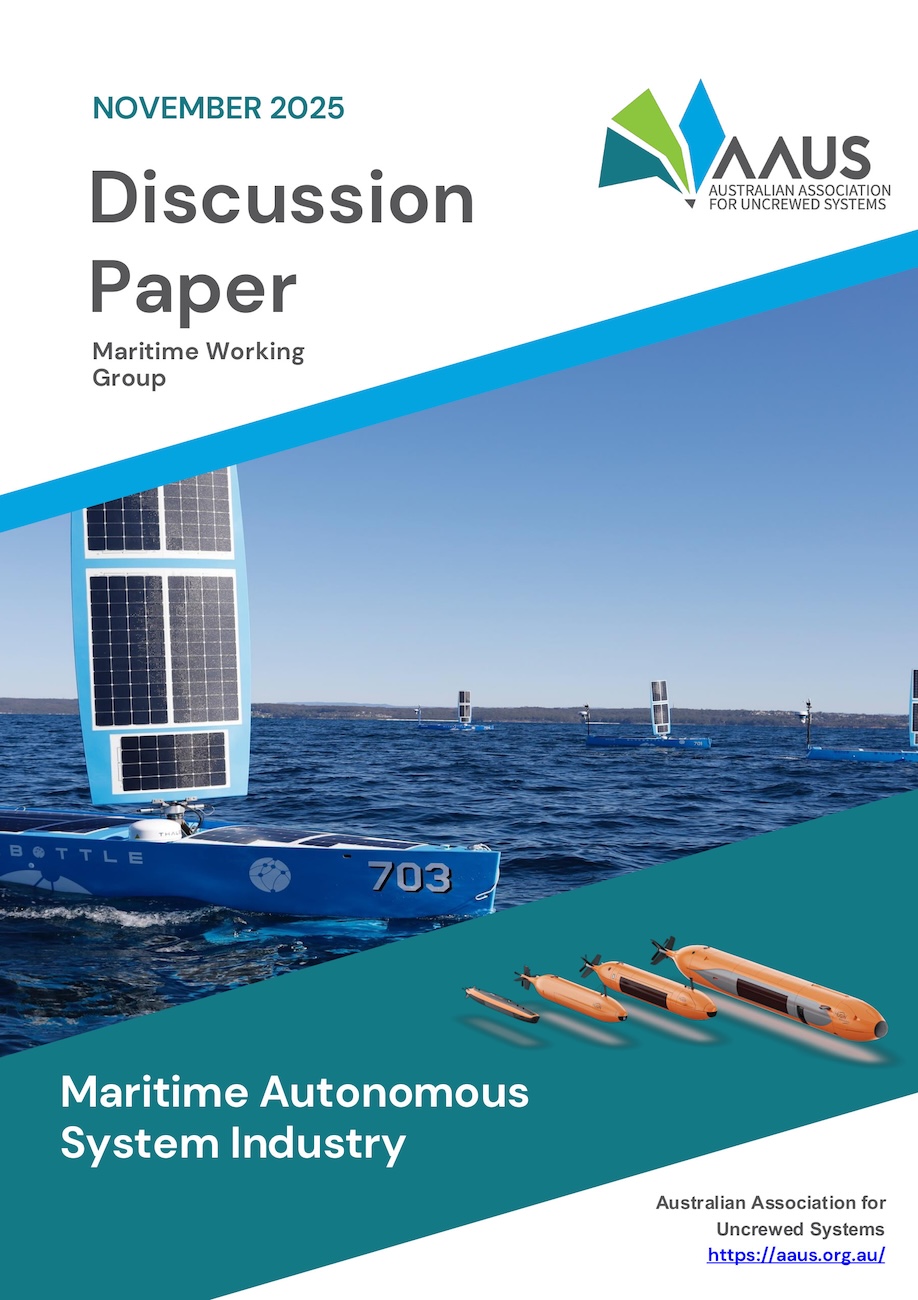
Vic Grosjean publishes Maritime Autonomous Systems Industry Discussion Paper.
Setting the Direction for the Maritime Sector
Maritime Working Group – Australian Association for Uncrewed Systems (AAUS) https://aaus.org.au
Transforming Australia’s Maritime Industry
The November 2025 Maritime Autonomous Systems (MAS) Discussion Paper, released by the AAUS Maritime Working Group (MWG), highlights the transformative potential of autonomous technologies in Australia’s maritime sector. MAS—encompassing ROVs, AUVs, USVs, and UAVs—combine automation, connectivity, and advanced sensors, offering revolutionary opportunities for defence, marine science, and offshore energy.
The paper provides a comprehensive industry perspective on the development of sovereign MAS capabilities, outlining key challenges and proposing targeted solutions to foster innovation, sustainable growth, and global competitiveness.
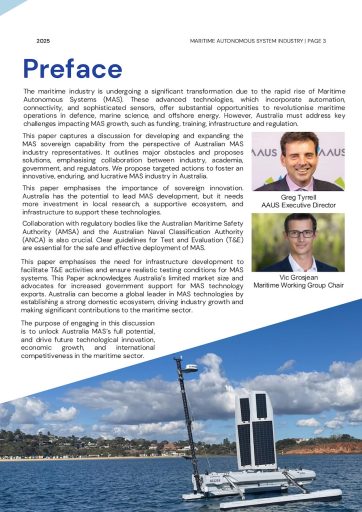
Preface: A Call for Sovereign Innovation
Australia has the potential to lead MAS development, but this requires:
Investment in local research and development
A supportive ecosystem for industry, academia, and government collaboration
“Collaboration with regulatory bodies like AMSA and ANCA is crucial. Clear T&E guidelines are essential for safe and effective MAS deployment.”
Vic Grosjean, MWG Chair, adds:
“Australia can become a global leader in MAS technologies by establishing a strong domestic ecosystem, driving industry growth, and contributing meaningfully to the maritime sector.”
Industry Insights: Survey and Consultation Findings
The paper draws on two critical surveys:
2023 MAS National Industry Survey
2025 Follow-up Industry Feedback
Key findings reveal persistent operational risks:
Regulatory uncertainty: Nearly one-third of participants identified this as a major risk.
Diversity of platforms and use-cases: Platforms spanning air, sea, and underwater domains create classification and operational challenges.
Fragmented legislative alignment: Past reviews, such as the 2022 DITRDC Review of DSV Safety Legislation, highlighted mismatched regulatory frameworks and limited agreement on forward-looking amendments.
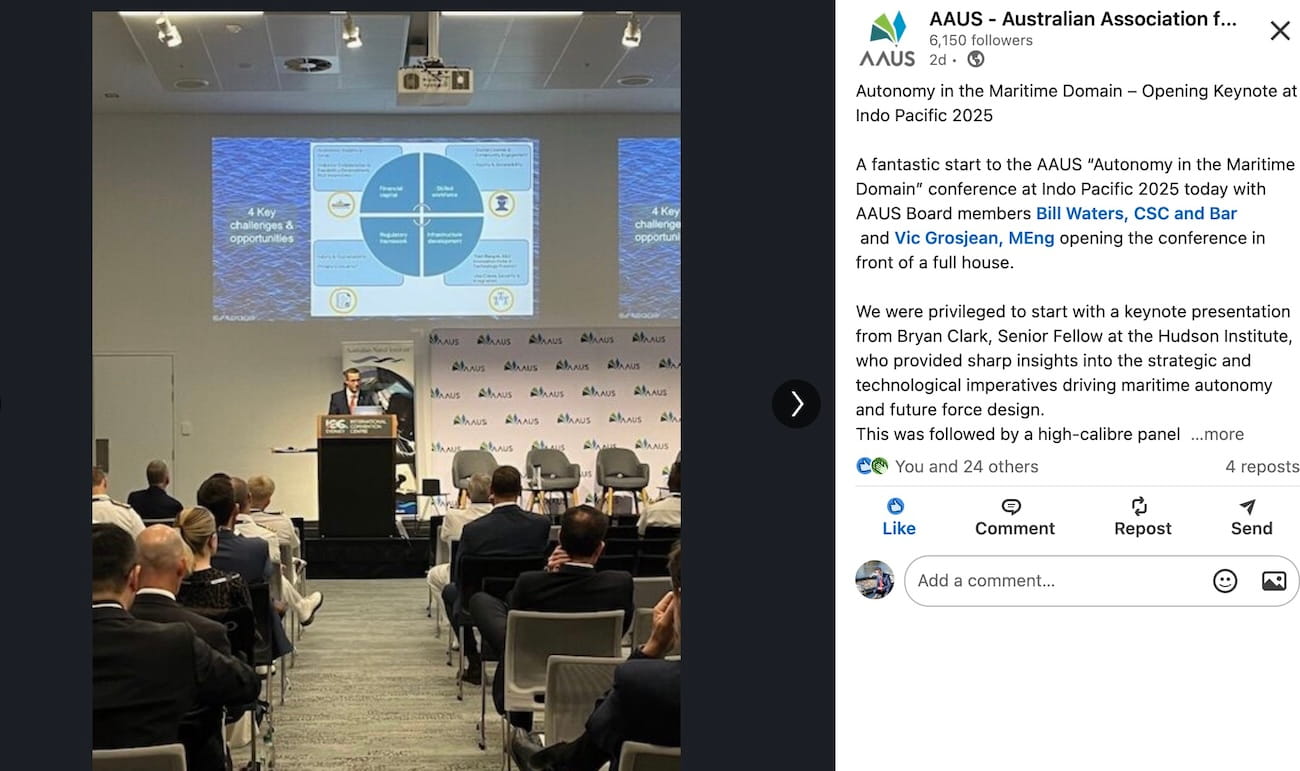
Challenges Facing the MAS Sector
The Discussion Paper identifies several enduring obstacles to growth:
Access to capital: Many Australian MAS businesses struggle to secure funding for development and scale-up.
Skilled workforce shortage: The need for standardised MAS training and recognised competency frameworks is critical.
Infrastructure gaps: Limited investment in test ranges and operational facilities restricts domestic innovation.
Regulatory complexity: Ambiguity around licensing, crewed vs uncrewed operations, and AI-driven vessels slows deployment.
Temporary exemptions, while useful, are not scalable, highlighting the need for unified regulatory and operational frameworks.
Industry Consulting Insight: OceanX Group
Operating at the intersection of technology, regulation, and strategy, OceanX Group has provided critical consulting support to MAS organisations across ROVs, AUVs, ASVs, and UAVs.
Key contributions include:
Helping clients navigate fragmented and inconsistent regulatory environments
Advising on platform classification, operational compliance, and cross-domain integration
Supporting Test & Evaluation activities to ensure safe, realistic, and effective deployment
Contributing expertise to workforce and training discussions, helping shape the AAUS 2025 Maritime Industry Draft Workforce Plan
As MAS platforms diversify and regulations lag behind technological progress, OceanX Group’s experience demonstrates how industry-led consultation bridges the gap between innovation and safe, compliant operations, while helping stakeholders build a shared language and standards for the sector.
From Policy to Practice: Workforce and Accreditation
Workforce development is central to professionalising MAS in Australia:
AAUS response to the 2025 Maritime Industry Draft Workforce Plan calls for a national MAS training and accreditation program.
Standardised qualifications will ensure operators meet safety and ethical standards, supporting both commercial and regulatory confidence.
A sector-recognised accreditation framework, expected to launch around 2027, is seen as essential for professionalisation and sustainable industry growth.
Toward a Unified Voice
Legislative reform alone is insufficient. The MAS sector must also:
Develop a shared operational language
Harmonise standards and practices
Establish credible training pathways
Vic Grosjean notes:
“Accreditation isn’t just a compliance tool—it’s a catalyst for trust, professionalisation, and long-term resilience.”
Collaboration across industry, government, and regulators will ensure MAS growth is safe, scalable, and globally competitive.
Conclusion: Unlocking Australia’s MAS Potential
The November 2025 Discussion Paper provides a clear roadmap for expanding Australia’s MAS capabilities:
Strengthening domestic innovation and infrastructure
Professionalising the workforce through training and accreditation
Engaging regulatory bodies for clearer, fit-for-purpose frameworks
Leveraging consulting expertise, to navigate operational complexity
Encouraging collaboration and shared standards across a fragmented industry
By implementing these strategies, Australia has the opportunity to become a global leader in maritime autonomous systems, fostering technological innovation, economic growth, and international competitiveness. AAUS Website
About the author: Vic Grosjean
Chartered Engineer with 2 decades of Ocean experience, Vic Grosjean is Principal Consultant at OceanX Group, an Engineering Consultancy specialising in Environmental Monitoring solutions.
As a leader and community educator, he strives for projects to reduce water pollution on a global scale and make a long-term difference for humanity. His career focus is to build collaboration between organizations in order to advance Engineering and preserve the Environment with the ultimate goal of Saving our Oceans.