| FOR IMMEDIATE RELEASE |
24, Jun 2025 – Testing New Marine Technologies Can Save the Great Barrier Reef.
Vic Grosjean Testing New Marine Technologies Can Save the Great Barrier Reef.
The Reef at a Tipping Point
The Great Barrier Reef, the largest coral ecosystem on the planet, is under severe stress. Rising ocean temperatures, pollution from plastics, and agricultural runoff are eroding its resilience. Over the past thirty years, more than half of the reef’s coral cover has disappeared, while bleaching events have become increasingly frequent. If the global temperature continues to rise unchecked, scientists predict that nearly all coral reefs could collapse by the end of this century.
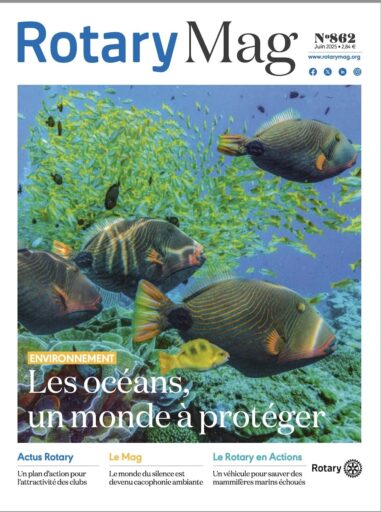
Innovation Beneath the Waves
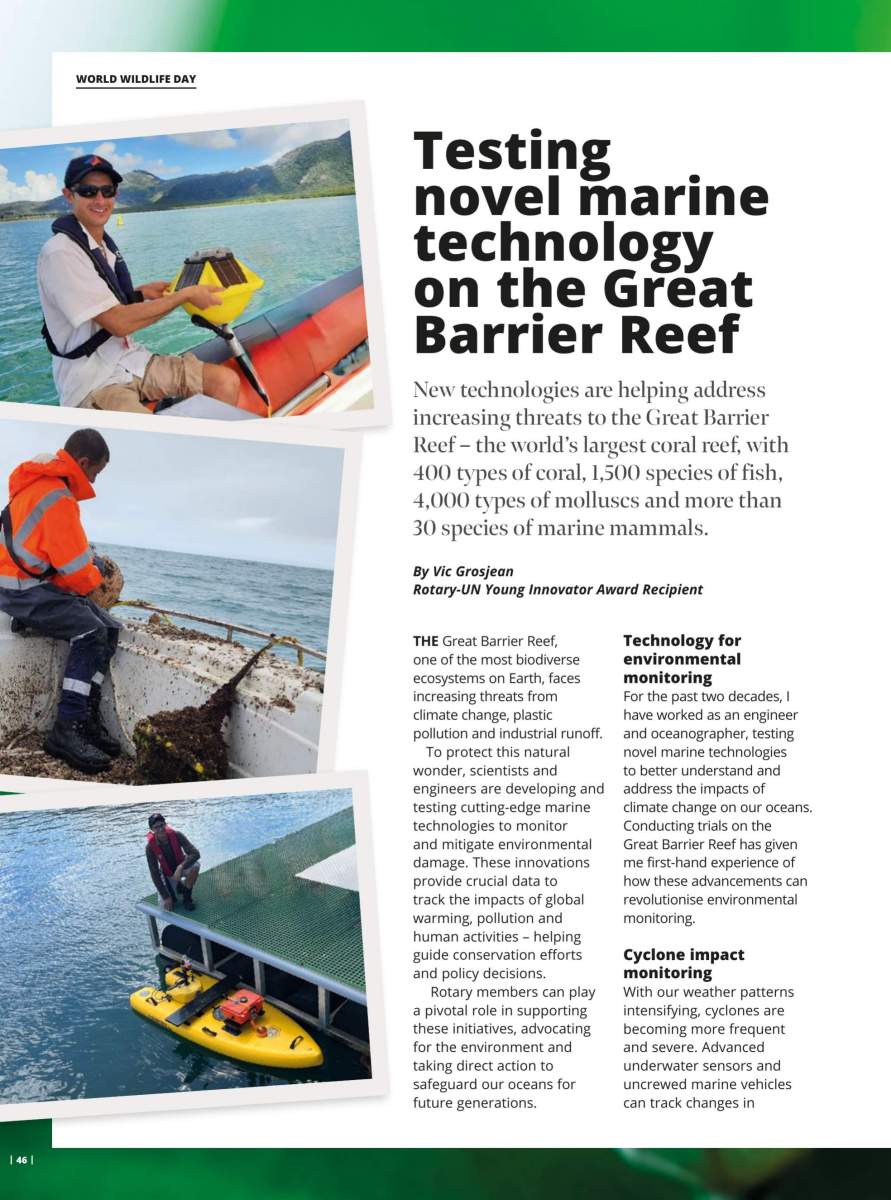
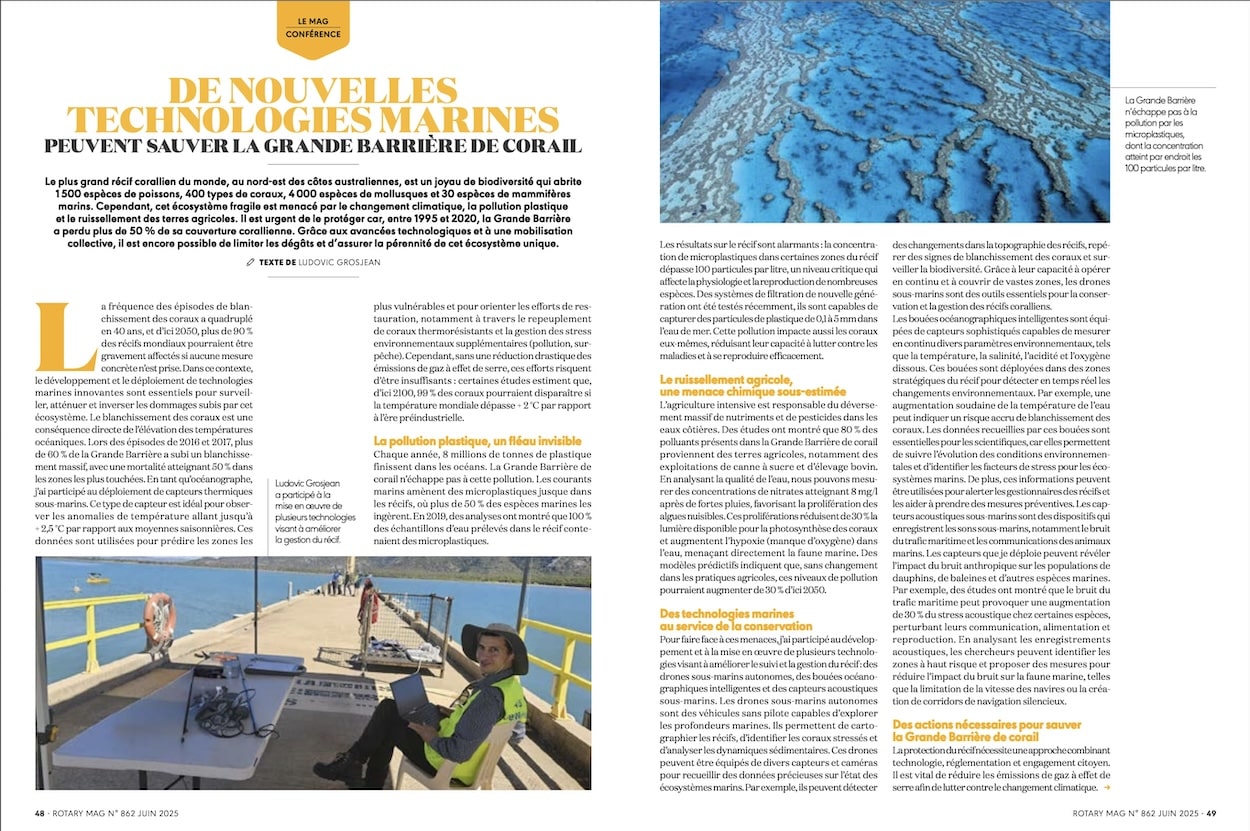
Amid this urgency, technology is offering new ways to understand and protect the reef. In recent years, I have been directly involved in testing marine technologies designed to monitor and restore this fragile ecosystem. Autonomous underwater drones, for example, are now able to map reef structures, track biodiversity, and detect early signs of bleaching. Their capacity to operate continuously across vast areas provides insights that were once impossible to gather.
Oceanographic smart buoys are also transforming our ability to track environmental changes. Deployed in strategic locations, they measure temperature, salinity, acidity, and oxygen levels, sending real-time data to research teams. These signals act as an early warning system, allowing us to anticipate and mitigate mass bleaching events before they spread.
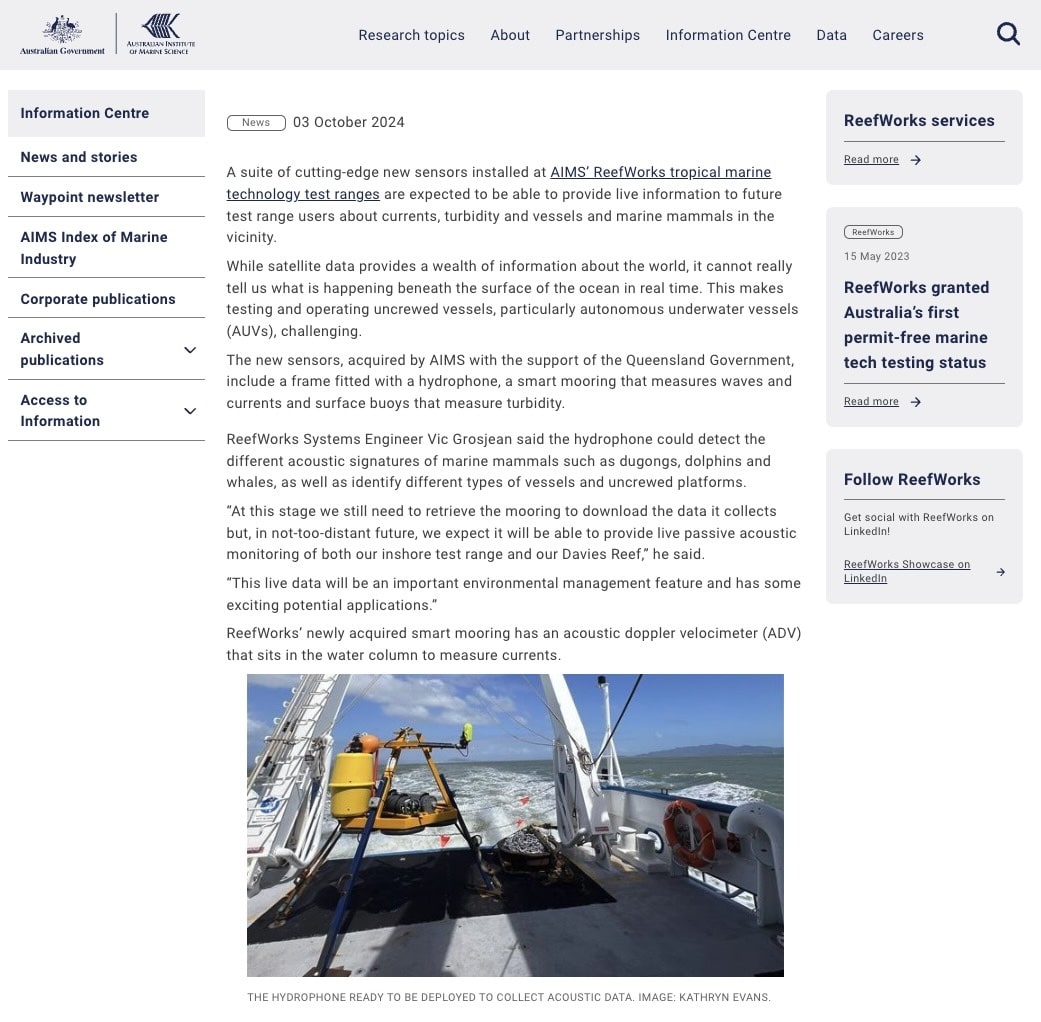
Another critical innovation is the use of acoustic monitoring systems. Shipping noise disrupts dolphins, whales, and countless other marine animals. By recording and analyzing underwater soundscapes, these sensors reveal the extent of acoustic stress and guide management strategies such as quieter navigation routes or reduced vessel speeds in sensitive areas.
Microplastic pollution is equally alarming. In certain reef zones, concentrations surpass one hundred particles per liter, weakening coral resilience and reducing fish reproduction. The testing of next-generation filtration systems, capable of capturing microscopic particles, has shown encouraging potential to reduce one of the most insidious threats to marine life.
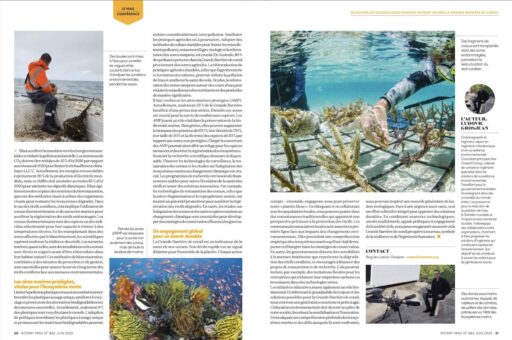
Technology Meets Responsibility
While these tools are vital, technology alone cannot save the reef. Reducing greenhouse gas emissions remains the single most important action to limit ocean warming. Agricultural practices must also evolve to prevent pesticides and excess nutrients from flowing into coastal waters. Expanding marine protected areas, restoring corals through nurseries and heat-resistant species, and banning single-use plastics are all necessary steps that must accompany innovation.
A Shared Global Mission
The Great Barrier Reef is not just an Australian treasure—it is a global indicator of ocean health. Its decline is a warning for all humanity. Saving it requires a collective response that brings together advanced technologies, Indigenous wisdom, political will, and community action.
Read more:
Read my feature in Rotary Mag 👉 https://www.rotarymag.org/
‘NEW MARINE TECHNOLOGIES CAN SAVE THE GREAT BARRIER REEF’, N° 862 JUIN 2025, 24 August 2025, by Vic Grosjean, on ‘ROTARY MAG’, Solutions to help monitor and save the Great Barrier Reef using new technologies. • https://www.rotarymag.org/ Join the conversation and help us clean our oceans! 0 “